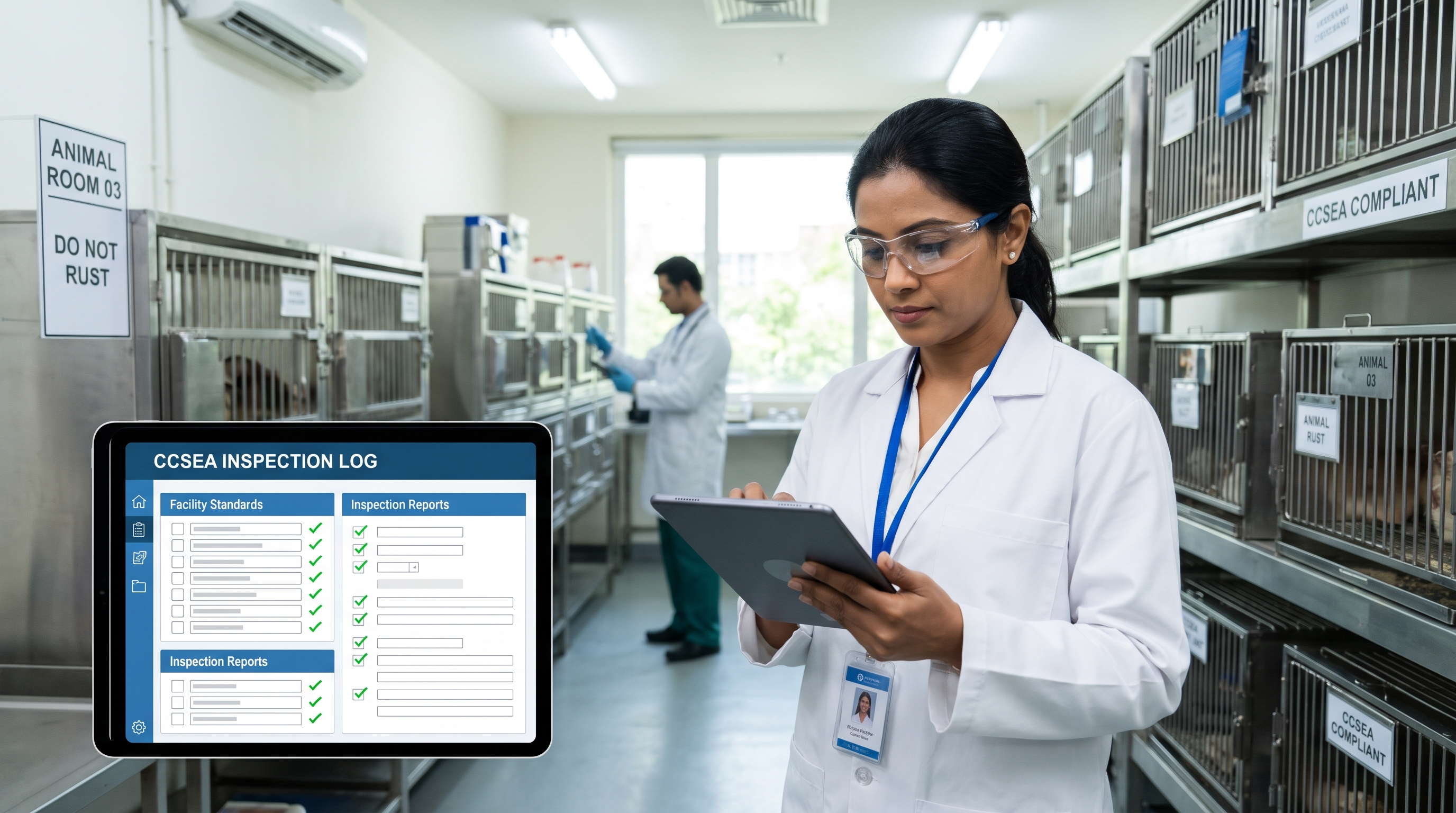
The implementation of the Prevention of Cruelty to Animals Rules, 2026 introduces a crucial mandate for physical site verification, placing a significant operational responsibility on statutory oversight bodies. While the updated frameworks require physical inspections of animal house facilities and formal IAEC meetings, periodic site visits create an administrative burden of manual data reconciliation for government nominees. Automated digital logs resolve this operational bottleneck. By providing a neutral, system-enforced tracking baseline, this framework allows central auditors to execute seamless pre-audit verifications before stepping onto the facility floor, optimizing the efficiency of statutory field inspections while maintaining research velocity and safeguarding global market compliance.
The Data Overhead in Field Auditing
While mandatory physical inspections ensure a vital regulatory presence, evaluating compliance strictly through periodic site visits introduces distinct systemic friction. As established in Monitoring Data Under New CCSEA Animal Testing Rules published by KR PET EYE LLP, relying on post-facto, self-reported paper trails leaves open structural questions regarding data verification. When applied to field inspections, this traditional reliance on manual paperwork creates severe operational vulnerabilities that stakeholders can easily visualize:
i. The Post-Facto Reconciliation Burden: Picture an inspector sitting in a laboratory administrative room, surrounded by stacks of handwritten logbooks, printouts, and separate local spreadsheets. Manually cross-referencing these fragmented pages to piece together complete usage timelines creates massive administrative lag, slowing down the audit process for both the facility staff and the government nominee.
ii. The Baseline Visibility Gap: Imagine a physical inspection as a single snapshot taken on a single day. The inspector sees the facility's condition in that specific moment, but without an independent data ledger tracking daily entries between scheduled visits, validating the long-term historical consistency of institutional approvals requires extensive, blind cross-checking.
iii. Operational Interruption: On the day of an official site visit, standard laboratory workflows physically grind to a halt. Administrative staff must be pulled away from active tasks to hunt down old paper trails, verify missing signatures, and manually pull historical files, creating severe friction for institutions trying to prioritize research velocity.
A Neutral Digital Utility for Field Inspections
To transition the central regulatory body from a passive reviewer of historical records into an agile, data-driven auditor, the implementation of an independent digital infrastructure provides the perfect technological support for physical field inspections:
i. Pre-Audit Data Baselines: Instead of walking blindly into a facility, imagine an inspector opening a secure, cloud-based dashboard before they leave for a site visit. Because local institutional decisions are automatically logged onto a shared ledger, the system generates an unalterable operational baseline, allowing government nominees to analyze trend lines and identify tracking patterns in advance.
ii. Automated Discrepancy Matching: The digital framework continuously cross-references active facility dimensions against standardized protocols. If a local committee logs an approval that conflicts with spatial capacities or active regulatory guidelines, the system automatically highlights the anomaly, creating a targeted checklist for the inspector to verify physical during their walkthrough.
iii. Streamlined Verification Workflows: Visualize an inspector on the facility floor using a handheld devices to scan a random subject's token. The Device instantly pulls up an unbroken digital chain of custody from the central ledger, completely bypassing the need to search through filing cabinets or wait for staff to locate manual paperwork.
Structural Advantages for the Enterprise Ecosystem
Transitioning from manual paper oversight to a synchronized digital ledger delivers immediate, structural value across two vital operational pillars:
i. Ease of Doing Operations: By automating data capture and compliance workflows at the institutional level, laboratories eliminate the heavy administrative burden of manual audit preparation. Institutional Animal Ethics Committee (IAECs) can focus their attention entirely on qualitative ethical evaluations, while the underlying technical framework handles the complex burden of baseline data logging without interrupting active research velocity.
ii. Global Compliance and Market Protection: By backing every physical inspection trail with an unalterable digital chain of custody, the framework proactively insulates the domestic bio-research ecosystem from international regulatory pushback. Standardizing this real-time traceability protects the global export potential of clinical data by aligning local facility operations directly with rigorous international biosecurity compliance standards (such as the EU's Directive 2010/63/EU).
Conclusions and Next steps
Evolving biomedical regulations create an ideal moment to complement physical inspections with a proactive digital utility. Automated pre-audit logs safeguard data integrity and provide the non-intrusive oversight demanded by global biosecurity standards, helping research enterprises and regulatory bodies align compliance with operational speed.
For policy inquiries, municipal collaboration discussions, or institutional whitepapers, contact KR PET EYE LLP at:corporate@krpeteyellp.com

Koushik Gaja
Managing Partner
Koushik Gaja is an entrepreneur, researcher, and author. An alumnus of the University of Glasgow, he currently directs his business ventures as the Managing Partner of KR PET EYE LLP. Alongside his entrepreneurial work, his research and writing focus on human behavior and reflection, leading to the publication of his books, Pause: What Happens Between Impulse and Action and The World Just Is.